

A picker reaches a location that does not have enough stock for the next order. What they need may be sitting in reserve, but that doesn’t help until someone moves it to the pick face. These delays can compound during a busy shift and affect the next pick.
Warehouse replenishment is part of inventory management and involves moving stock into a picking location assigned to a specific item. The question is when to request the move, which requests need attention first, and how the picking team will know the stock is ready.
Start With the Stock and Orders in Front of You
Before requesting a refill, check what the pick face needs and what the warehouse can supply:
- Stock at the pick face: How much is there now, and does the inventory record agree? Check if any of that quantity is already committed to open picks.
- Orders coming up: Will the stock cover the work in the queue, or will a picker run short before the next planned refill?
- Reserve stock: Is the right item available in a reserve location, and is another move already planned or underway?
- Room at the destination: Can the established pick face accept the proposed quantity when it arrives?
These checks give the team more information than a low-stock alert alone. A location below its usual level may still cover the next orders. Another location may look fine until a larger order is released. Use the stocking limits and priority rules your operation has approved because there is no single quantity that works for every item or shift.
This guide assumes the item’s picking location and its stocking limits are already set. Choosing or resizing that location is a separate slotting decision.
Choose the Right Replenishment Strategy
Most operations need a mix of planned refills and requests driven by orders. These three approaches answer different questions, and you can use more than one if your team has a clear way to avoid duplicates.
Demand-Driven Replenishment
Use queued or released orders to spot a shortage before a picker reaches the location. Compare the quantity available at the pick face with what the upcoming picks require. If it will run short, check reserve stock levels, room at the destination, and any refill already on its way before requesting another move.
The timing matters as much as the shortage. Stock needed for an order the team is picking now deserves a different response from stock needed for later work. Tell the person assigning replenishment work when the picker will need it, rather than marking every demand-driven request “urgent.”
Minimum-Stock Replenishment
With min-max replenishment, a pick face reaches an agreed minimum and the team refills it toward an agreed maximum. This can catch a low location before an order is held up.
The minimum tells you to consider a move. It does not, by itself, tell you to interrupt other work. Check the orders ahead and any stock already on its way. Also check how much room will be available when the refill arrives, so two requests do not send more stock than the location can accept.
Top-Off Replenishment
A top-off is a planned pass through selected pick faces before a busy work period or during a quieter one. It gives your team a chance to handle routine refills together instead of waiting for every location to run low.
Choose locations based on expected work, current stock, reserve availability, and space at the pick face. A top-off can wait when a picker needs stock for an order in progress. The aim is to have enough confirmed stock for the work ahead, not to fill every location simply because it is on the list.
Make Every Move Clear
A replenishment request should tell the worker what to move and why it matters. Give each move a clear owner and include:
- the item and quantity requested;
- the reserve location and destination pick face;
- when the stock is needed, especially if an order is waiting;
- whether another move for that item and location is already underway; and
- where the worker will report the quantity actually moved or an issue that prevents the move.
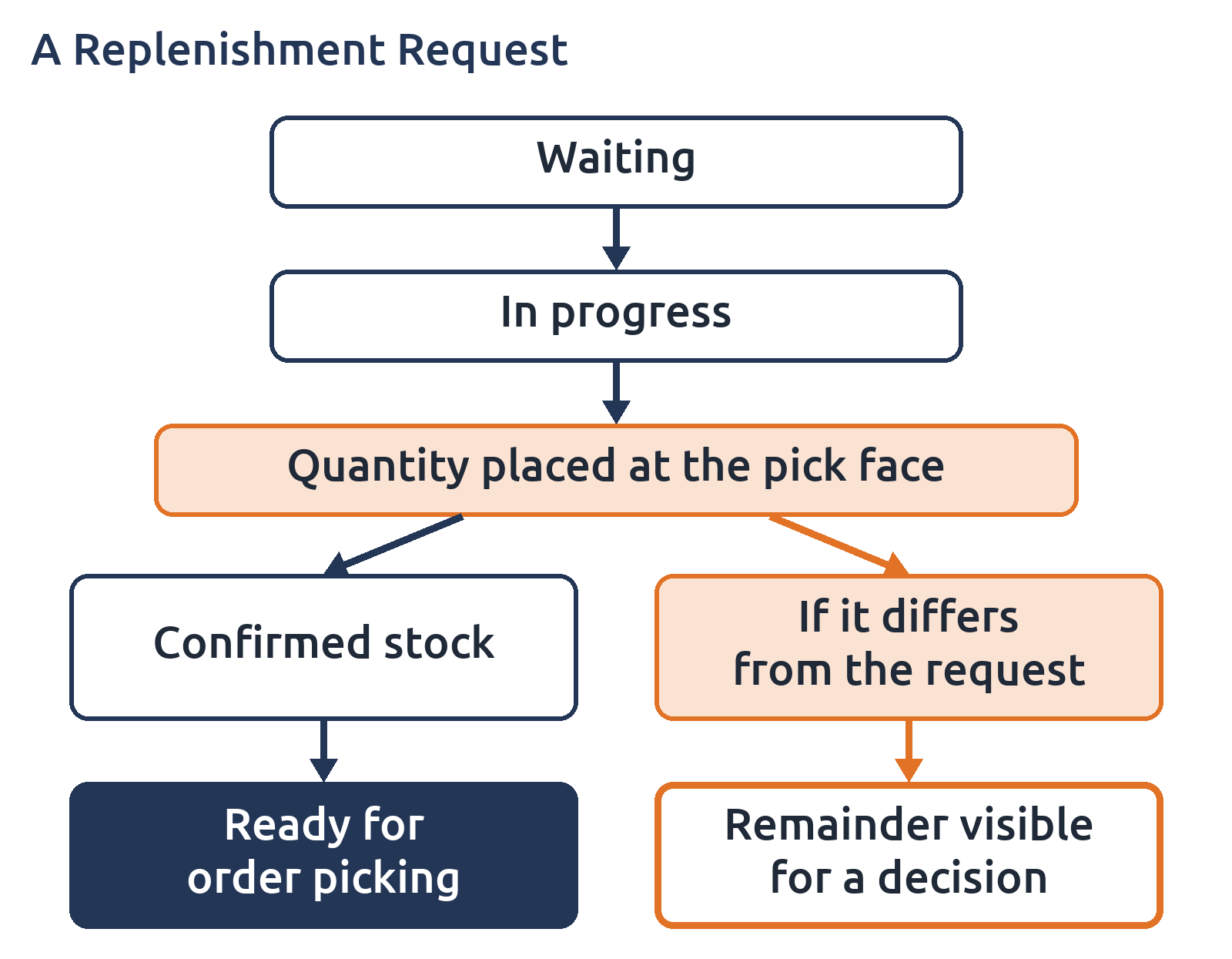
A request sitting in a queue does not mean the stock is at the pick face. The person assigning work needs to know whether it is waiting, in progress, partly complete, or finished. Pickers need a clear update if the stock they are waiting for has not arrived.
For example, a top-off may be planned for later in the shift. Then a larger order is released and the pick face will run short sooner. Check whether a refill is already underway, confirm reserve stock and space, and have the person assigning work decide whether to move that task ahead. Tell the picking team what is available now and what is still expected.
Confirm What Arrived Before Pick Face Replenishment
The stock is ready for order picking only after the amount placed at the pick face has been checked and the location record shows what actually arrived.
Have the person completing the move report the quantity placed at the pick face. If it differs from the request, record the amount that arrived and leave the remainder visible for a decision. Whether your team uses a warehouse management system or another inventory record, the picking team should be able to tell confirmed stock from stock that is only planned or on its way.
When replenishment and picking happen at the same location, agree on how the teams will share access and pass along the completion update. The exact method depends on your operation, but a picker should not have to guess whether a refill is finished.
Give Problems an Owner and an Update
Sometimes reserve has less stock than the record shows. The pick face may be full or temporarily unavailable. A worker may find a different quantity than the request called for. In each case, record what happened and put the decision with someone authorized to make it.
That person may decide to move an available partial quantity, use another eligible reserve location, wait for space, correct a record, or tell the picking team that an order is still short. Keep the update specific: which item and pick face are affected, what quantity is confirmed there now, what remains open, and who owns the next step. Do not close the whole request just because part of the stock arrived.
If the same problems keep interrupting picking activities, look at the pattern. Are refill requests arriving too late? Do routine top-offs keep losing priority? Are tasks marked done before the quantity at the pick face is confirmed? Those answers point to different changes in the replenishment process.
When Replenishment Keeps Interrupting Orders
Repeated urgent refills or unresolved quantities can signal a problem in how replenishment work is triggered, prioritized, or handed to picking. Our warehouse optimization work can help assess recurring picking process problems. Our warehouse consulting services can help you examine the rules and responsibilities behind the process.
For a Free Quote, tell us how you request replenishment today, which pick locations are affected, what reserve stock is available, and where interruptions keep occurring. We can discuss the warehouse work that fits your situation.