

A tote full of parts can look ready to go until someone starts the job and discovers something’s missing. Then the next team has to stop, figure out what they received, and track down what they didn’t.
Warehouse kitting brings the parts for a specific use together before that work begins. To make it work, your team needs to know what belongs in each kit, when to prepare it, and how to confirm it’s complete. Here’s how we’d approach those decisions when organizing a kitting process in your warehouse.
What Are Kitting Services?
Kitting means gathering a specified set of items in the quantities needed for a particular task or use. For example, you might prepare a set of replacement parts and instructions for a recurring maintenance job. The kit is complete when it contains everything on the approved component list and has passed your required checks.
The warehouse team gathers and checks those parts. Building or manufacturing a product from them is a separate activity. Picking several unrelated items for one customer order is also different: a kit has an agreed set of contents that belong together.
A kit doesn’t have to become a new sellable SKU or fit in one box. Some kits need several containers. What matters is that the person receiving the kit can identify the whole set and knows it’s ready for the intended work.
Should You Prepare Kits Ahead of Time or As Needed?
Start with how often you use the kit and how often its contents change. Then look at available parts and the space you’ll need to hold prepared kits.
Prepare Familiar, Repeat Kits Ahead of Demand
Assembling the kits in advance or “pre-kitting” makes sense when you regularly need the same parts in the same quantities. Your team can prepare an agreed number and hold them until they’re needed.
Be realistic about how many to build. Parts sitting in prepared kits aren’t available for other work unless you break those kits down and update your records. You’ll also need somewhere to keep them.
If the component list changes, check any kits you’ve already prepared before sending them out. A kit that was ready last week could need attention before its next use.
Prepare Changing or Occasional Kits When Needed
If demand is irregular or the parts vary from job to job, gathering a kit when a specific need comes in can be more practical. You keep the individual items available until you know where they’re needed.
Allow time to gather and check everything before the receiving team expects it. Any shortages found at the last minute can leave the kit incomplete when the work is supposed to start.
You can use both approaches. Prepare stable, repeat kits ahead of time and handle less predictable kits as requests arrive. Give each type a clear trigger, such as an agreed stock level or a confirmed job, so the team knows when to start.
A Warehouse Kitting Process Your Team Can Follow
The following steps give your team a consistent way to prepare kits without making everyday work more complicated than it needs to be.
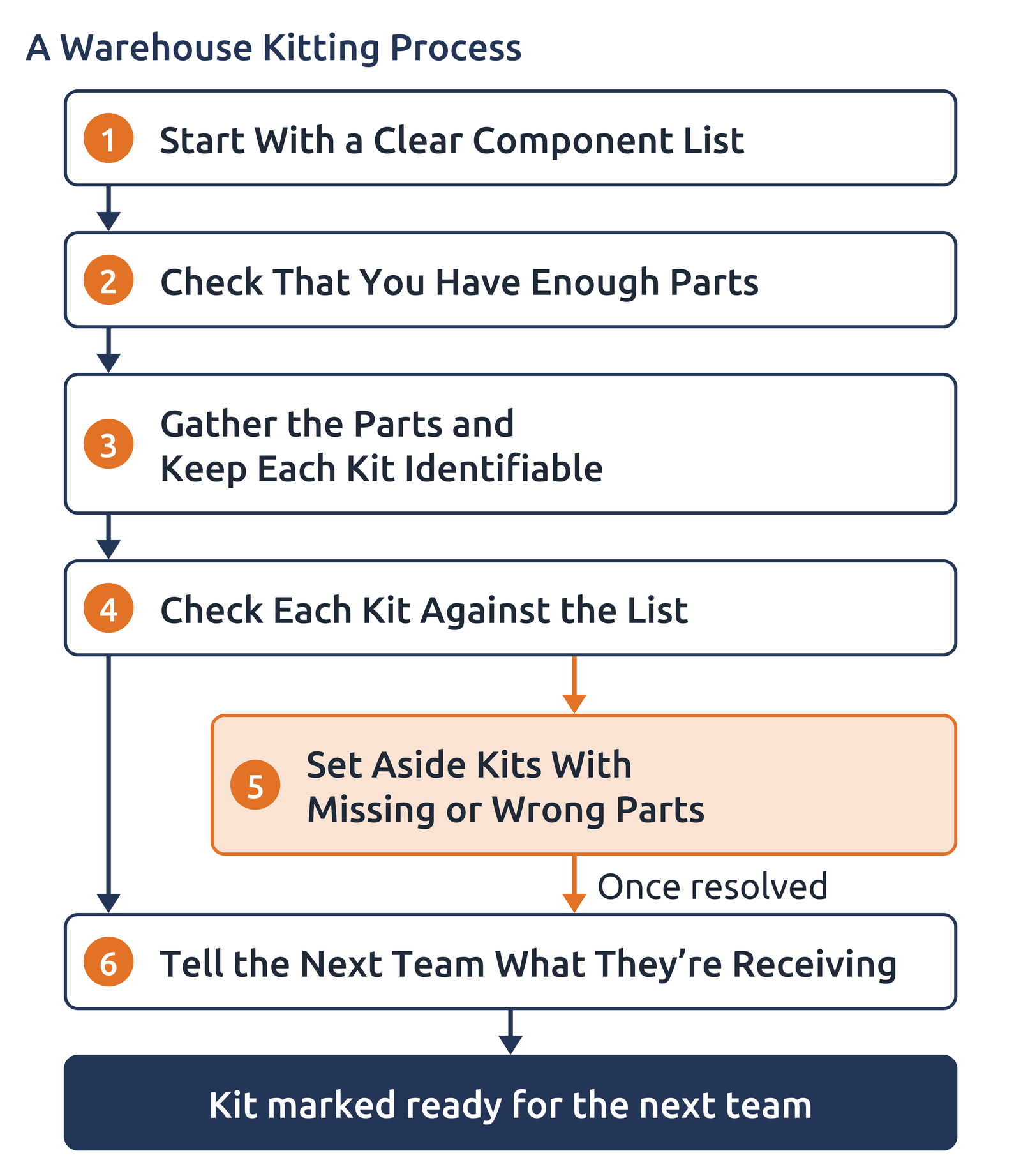
1. Start With a Clear Component List
Use a list that tells the person gathering parts exactly what to include:
- The kit name or identifier.
- Each required part number or item identifier.
- The quantity of each item for one kit.
- The applicable version or date when the contents can change.
- Any approved alternatives and the conditions for using them.
Have the person responsible for the kit’s contents confirm the list. If two parts look similar, include enough detail to tell them apart. A description such as “small bracket” leaves too much to guesswork.
Keep the current list available where the work happens. Staff shouldn’t need to rely on an old printout or remember what went into the last kit.
2. Check That You Have Enough Parts
Confirm the number of kits needed, then work out the total quantity of each component. Compare that with usable stock available for this work, after accounting for parts already committed elsewhere.
Check before gathering a large batch. Finding out that one component is short after you’ve spread everything across the work area leaves you with unfinished kits taking up space.
Follow your inventory rules for reserving or issuing the components. Once parts have been assigned to a kit, your records should reflect that so another team doesn’t plan to use the same stock.
3. Gather the Parts and Keep Each Kit Identifiable
Choose a preparation area to manage kitting with enough room to separate what you’re working on. Your team needs access to the components, a place to check them, and somewhere to put work that’s waiting for attention.
Keep the kit identifier with its parts throughout the work. When a kit spans several containers, label them so the receiving team can recognize that they belong together and see how many containers to expect.
Walk through the space with the people doing the job. Look for parts that are awkward to reach, kits that get mixed together, and unfinished work that blocks the checking area.
4. Check Each Kit Against the List
Assign someone to confirm the contents using your approved checking procedure. Check item identifiers and quantities against the list, along with any condition or inspection checks your operation requires.
Don’t judge completeness by how full the container looks. Record the completed check in the way your team uses to track the kit.
Make it clear who can approve a kit for its next use. In a smaller operation, one person may handle several steps, but the checks still need to happen.
5. Set Aside Kits With Missing or Wrong Parts
Keep incomplete kits clearly marked and separate from those ready for handoff. Then give the issue to a warehouse manager or someone who can resolve it:
- Missing part: Record which item is missing and how many are needed. Identify who will locate the stock or follow up on its availability.
- Wrong part: Check what was gathered against the current list and arrange the correction.
- Proposed substitute: Get approval from the person responsible for the kit’s contents before using it. A similar appearance or fit doesn’t establish that a part is an acceptable replacement.
Decide whether to hold the rest of the parts together or return them to available stock under your inventory rules. Whichever you choose, update the kit record and identify who will finish the work. Otherwise, the same unfinished kit can sit through several shifts with everyone assuming someone else is handling it.
6. Tell the Next Team What They’re Receiving
Once the required checks are complete and any issues are resolved, mark the kit ready and update its record. Give the receiving team the information they need to find and recognize it: the kit identifier, where it is, the number of containers, and any approved changes to its contents.
Use simple descriptions such as “in progress,” “waiting for parts,” and “ready.” The label on the kit and the record your team checks should agree. A note that says a part is missing shouldn’t disappear just because someone moves the container.
Get Help Organizing Your Kitting Area
If kits keep getting held up, look at where the work stops. Are parts unavailable, lists unclear, or prepared kits difficult to find? That tells you where to focus before adding equipment or setting aside more warehouse space.
We can help you work through those warehouse decisions. Our warehouse consulting services address operational flow, including how components move through kit preparation. Layout design can help you plan workspace and access, while our integration services help connect warehouse equipment, systems, and processes within the agreed project scope.
Tell us what kinds of kits you prepare, whether you build them ahead of time or as needed, where shortages or delays occur, and what workspace you have. Call us at (770) 638-4887 for help planning the warehouse improvements your team needs.