

Understanding pallet rack capacity starts with two practical questions: How much weight can the rack hold, and will the system fit the available space? The answers depend on the rack components, layout, stored products, and building conditions.
Two similar-looking racks may have different limits because beam length, beam spacing, upright design, and connection type can change the overall pallet rack load capacity. This guide explains what to check before making changes. Final capacity must come from the manufacturer’s chart for the exact system or from a qualified rack engineer.
How Much Weight Can a Pallet Rack Hold?
A pallet rack can hold only the load approved for its components and layout. There is no single rack weight capacity that applies to every pallet racking system.
Start by checking two limits:
- Pallet rack beam capacity: The approved load for a pair of beams at one level
- Upright frame capacity: The approved total load that the frames can support
Both limits must support the planned use. A pair of beams may be rated for one shelf load, while the upright frame may be unable to support the combined pallet rack weight from every level.
Decking and pallet supports have separate limits. They do not increase beam capacities or frame capacities unless included in the approved rack design.
Check the rack drawings, load plaque, and manufacturer’s capacity chart. If you cannot identify the parts or confirm the current layout, have the system reviewed before changing the load.
What Affects Pallet Rack Load Capacity?
Pallet racking systems are connected structures. Each load passes through the beams, upright frames, baseplates, anchors, and concrete floor.
Upright Frame Design
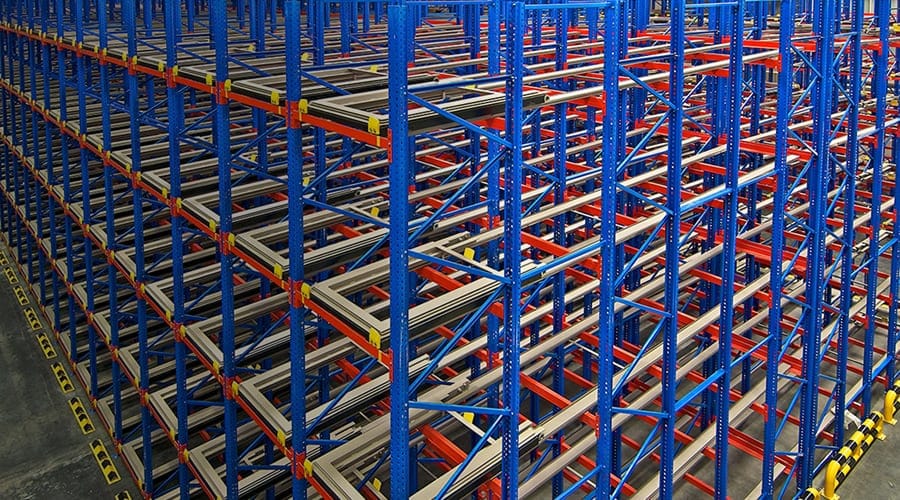
An upright frame has two columns joined by horizontal and diagonal braces, along with baseplates that connect the frame to the floor. Column shape, steel gauge, frame depth, and bracing pattern can all affect frame capacity.
The height of the first beam level also matters because the beams help support the columns. Moving the first beam higher leaves a longer section of each column unsupported, which may lower frame capacity.
Manufacturer charts are based on specific beam elevations. Use a chart only when the installed beam levels match the conditions listed in that document.
Beam Length and Shape
Beam length affects how much a beam bends under load, so longer and shorter beams from the same product line may have different ratings.
Beam height, cross-sectional shape, steel, welds, and end connections also affect pallet rack beam capacity. Two beams with the same outside dimensions may still have different ratings.
Beam-to-Frame Connections
Each beam connects to the upright frame through an end connector and a locking device. Connector shape, welds, locking pins, and the frame’s hole pattern all affect how the load is transferred.
Parts that fit together are not always approved for use together, especially with teardrop-style rack from different sources. Confirm that mixed components are compatible before using them in the same storage system.
Load Placement and Pallet Condition
Many beam charts assume a uniformly distributed load, which means the weight is spread across the pair of beams as the chart requires. Weight concentrated in one small area may cause the beams to perform differently.
Pallet size and condition also matter. A damaged pallet or one with unusual support points may not place the load where the rack design expects it. Record the full unit weight, pallet size, load direction, overhang, and support points.
How to Use a Pallet Rack Capacity Chart
Use a manufacturer capacity chart that matches the exact rack components. Confirm the chart’s version and read its notes, since each rating may depend on a specific setup.
For beams, confirm:
- Rack maker and product family
- Beam length and beam height
- Beam shape and connector type
- Required locking devices
- Number of pallets on each beam level
- How the weight must be spread
- Any listed limits on beam bending
For each upright frame, confirm:
- Column and frame type
- Frame height and depth
- Brace and baseplate design
- Height of every beam level
- Loads on each level
- Total load in each bay
- Anchor and floor needs
A pallet rack beam capacity chart applies only to the parts and setup it names. Ask for help if labels are missing or the installed rack does not match the chart.
ANSI/RMI MH16.1-2023 gives minimum rules for several types of industrial steel rack, including selective pallet racking. It does not cover every rack type. Drive-in, drive-through, and cantilever racks need other guidance. Local building, fire, and seismic rules may also apply.
How to Calculate the Load Your Rack Must Support
You can calculate the load you want to place on the rack. This does not tell you how much the rack is allowed to hold. The approved limit must come from the manufacturer’s chart or an engineering review.
First, find the weight of one full unit load:
Unit load = product weight + pallet or container weight
Next, find the planned load for one level:
Beam-level load = total weight of all pallets on that level
Repeat this step for all beam levels. Give these details to the manufacturer or engineer:
- Highest unit-load weight
- Number of pallets at each level
- Height of each beam level
- Rack height, depth, and bay width
- Beam length and beam spacing
- Photos of labels, connectors, and frame markings
- Pallet size, direction, and support points
- Type of decking and pallet supports
- Any current drawings or load plaques
- Building location and floor conditions
Do not average heavy and light pallets unless the approved plan allows it. The review should cover the heaviest allowed pallet and every place it may be stored.
Common Pallet Racking Dimensions and Sizes
There is no single standard pallet rack size. Rack dimensions should match the pallets, products, lift trucks, clear height, and needed clearances.
Upright Height and Depth
Upright height depends on the building, sprinklers, loads, and lift-truck reach. Frame depth should fit the pallet and planned overhang.
When matching used pallet rack uprights, record the height, depth, column shape, hole pattern, braces, and baseplates. Also photograph any labels or stamped marks. Size alone does not prove that parts will work together.
Beam Length and Height
Beam length helps set the bay opening and the number of pallets per level. Pallet width and needed side clearance also affect beam choice.
When buying used pallet rack beams, record the full length, clear span, beam height, shape, connector, and lock. Check the welds and ends for damage. Measure each part instead of relying on a common size name.
Bay and Row Dimensions
Bay width includes the beam span and upright columns. Row depth may include overhang, row spacers, and open space between rows. These measurements affect aisles and sprinklers.
Beam Spacing
Beam spacing must leave room for the pallet, product, beam, and lift-truck movement. Moving a beam also changes the open column length. That change can lower frame capacity. Check the new layout before moving any beam levels.
How Much Space Is Needed Between Pallet Racks?
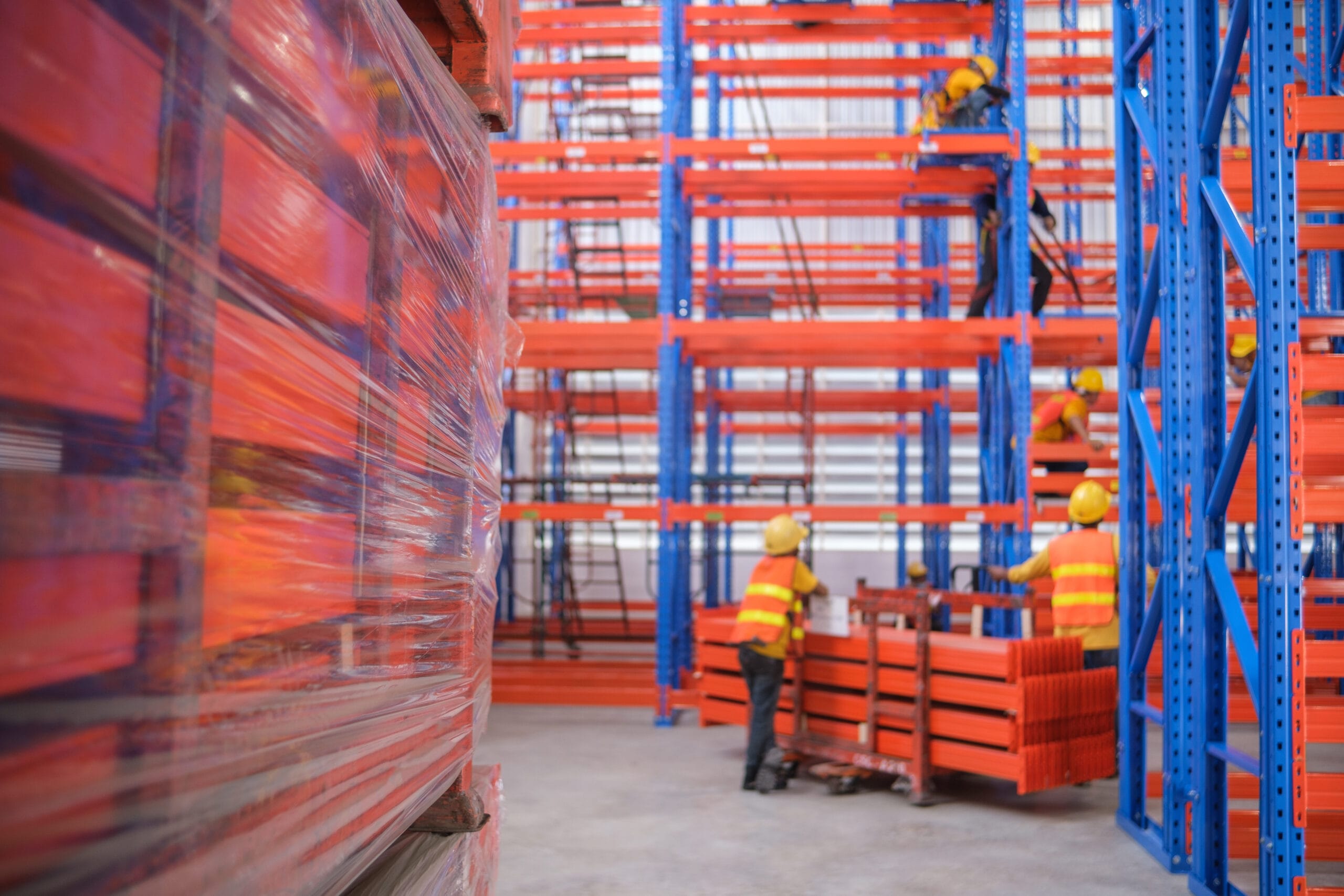
There is no one spacing rule for every warehouse. The right space depends on the lift truck, pallet size, traffic, sprinklers, exits, and building layout.
Check these areas:
- Side clearance: Space between two pallets and between a pallet and each upright
- Top clearance: Space above the load so a lift truck can place and remove it
- Aisle width: Space for the lift truck, load, turning path, and nearby traffic
- Row spacing: Space for pallet overhang, row spacers, and the required flue space
- Sprinkler clearance: Open space required by the approved fire protection plan
- Building clearance: Space around walls, columns, exits, doors, and electrical equipment
Use the lift-truck maker’s data for the actual truck and load. Have qualified professionals check fire and building clearances. A layout from another warehouse may not work in your building.
When Should Pallet Rack Capacity Be Reviewed Again?
Have the rack reviewed when its parts, loads, layout, or building conditions change. A new review may be needed when you:
- Raise or lower beam levels
- Add or remove a beam level
- Store heavier pallets
- Change the number of pallets per level
- Change beam length, shape, or connector type
- Replace an upright frame with a different type
- Mix parts from different rack systems
- Move the rack to another building
- Add decking, supports, flow lanes, or other equipment
- Find that the rack does not match its drawings or load plaque
The load plaque should always match the current rack. Replace or update it after an approved change. An old plaque can give workers the wrong rack weight capacity.
How Do Damage and Repairs Affect Capacity?
Rack damage can reduce capacity, but there is no safe way to guess by how much. Bent columns, damaged braces, loose anchors, cracked welds, and bent beams all need to be checked.
Unload or block off damaged areas as required by your safety plan. A professional pallet rack inspection can record the damage and identify the next step.
Do not straighten, weld, or reinforce rack parts based on a quick field decision. Engineered pallet rack repairs or approved replacement parts should match the rack and its loads. After the work, confirm that the drawings and load plaque are still correct.
Keep Clear Pallet Rack Capacity Records
Keep drawings, manufacturer charts, part lists, inspection reports, repair records, and current load plaques in one place.
If an existing rack has no clear records:
- Measure the layout and all beam levels.
- Photograph beams, frames, braces, connectors, labels, and baseplates.
- Record the heaviest planned pallet and each storage position.
- Mark any damaged, changed, or mixed parts.
- Ask the manufacturer or a qualified rack engineer to review the system.
- Update the drawings and load plaques after approval.
.We can help identify rack parts, record dimensions, inspect pallet racking systems, and gather the details needed for a full review. Contact Warehouse Cubed before changing loads, parts, or beam levels when the current capacity is not clear.