
If your packers have to move three things before they can open the next carton, watch what they’re moving. Is it a stack of empty boxes? An order with a missing item? A finished parcel waiting to be collected? Each points to a different problem, even though they all leave the packing area looking too small.
A useful warehouse packing station gives people room to pack, keeps everyday supplies close, and has somewhere for work to wait. Before you shop for a new table or more equipment, spend some time seeing how your team uses the space you already have.
Watch Order Fulfillment from Start to Finish
Choose a few orders that reflect the work your team handles. Include an ordinary order, a larger one, and anything that needs extra care or packaging. Watch during a busy period, too. A station can look perfectly fine when orders arrive one-at-a-time, but become crowded when several orders arrive together.
Follow each order through the packing process. Where does the packer check the items, choose a carton, add protective material, close the box, and apply the label? Pay attention whenever they stop, leave the station, or shift something out of the way.
Jot down the following notes:
- The product and carton sizes you use most, plus the awkward exceptions.
- Which packing materials and tools people reach for repeatedly.
- How many orders wait near the station when it’s busy.
- Where finished cartons sit before someone moves them.
Ask the packers what gets in their way. Something you saw only once, like a trip to find another carton size, might happen repeatedly throughout the shift. Their answers help you decide which problems deserve attention first.
Make Space for What Arrives, Stays, and Leaves
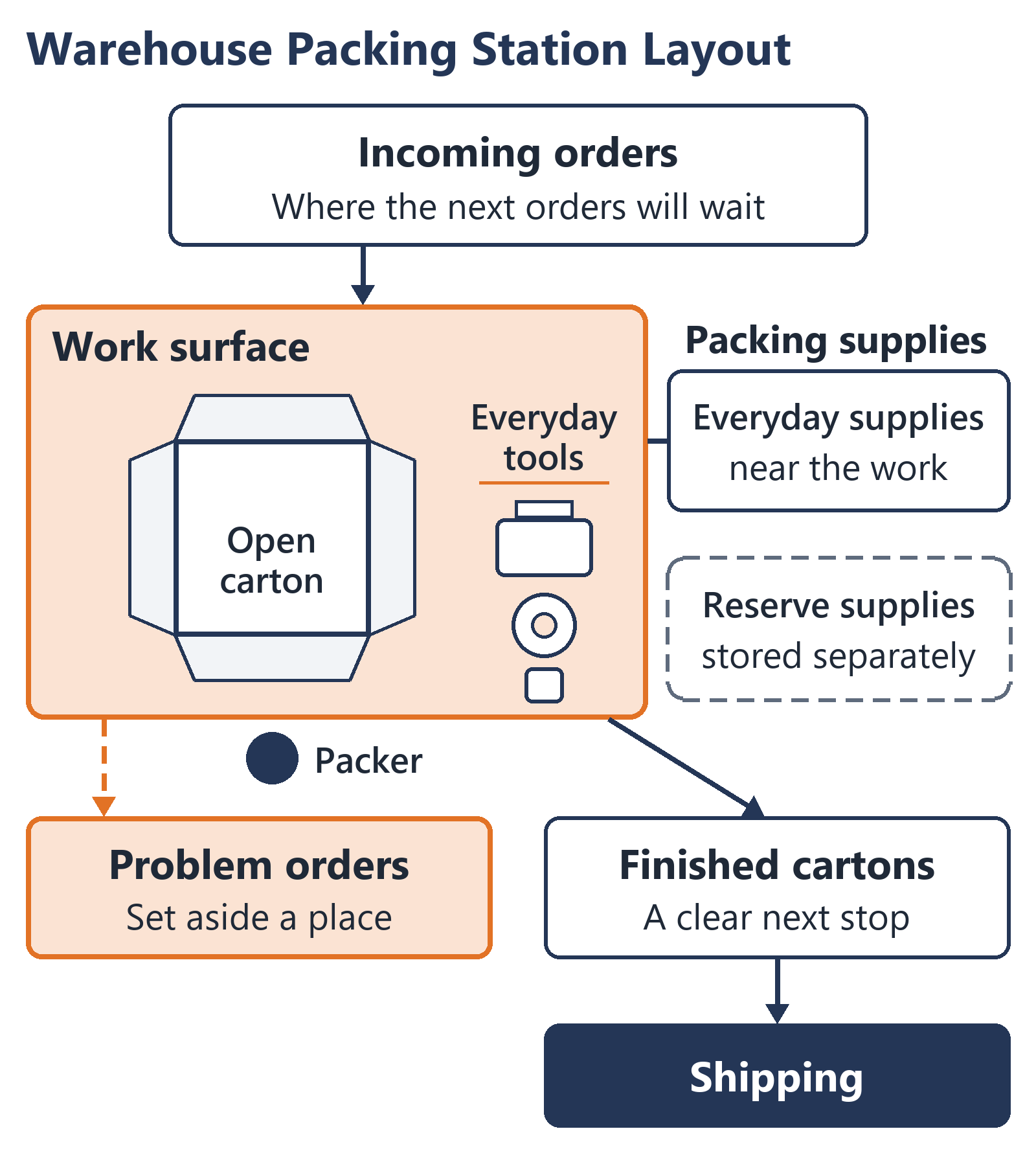
Packing station design includes the space around the table. Incoming orders, spare supplies, and finished boxes all need a place, or they’ll compete with the order someone is trying to pack.
Incoming Orders
Decide where the next orders will wait. The packer should be able to tell which items belong to each order and which order is ready to start. If a cart arrives with more work than the station can hold, look at how much gets delivered at once and where the rest can wait without blocking access.
You don’t need to redesign the picking operation to spot a poor handoff. Start with the moment work reaches packing: does the packer have a complete, identifiable order, or do they have to stop and sort it out?
Packing Supplies
Keep the cartons, tape, labels, and protective materials used most often near the work. Store reserve supplies separately so they don’t take over the table. A large stack of flat cartons might save a trip later, but it’s little help if the packer has to move it for every large order.
Think about restocking while someone is packing. Can another person reach the supply shelf? Is there room to bring in more cartons? Agree who will replenish supplies and what tells them it’s time, so an empty shelf doesn’t become a surprise halfway through an order.
Finished Cartons
Give outgoing cartons a clear next stop. If completed boxes keep collecting on the table, check how and when they’re moved to shipping. A bigger surface would hold more boxes, but those boxes would still need to leave.
Watch for people crossing each other’s paths as they move through the fulfillment process. What matters is whether people can complete their jobs from picking to packing without constantly moving around one another.
Put Tools Where People Use Them
Start with the open carton and the items going into it. Leave enough working space to handle both, then place everyday tools where the packer uses them in the work sequence.
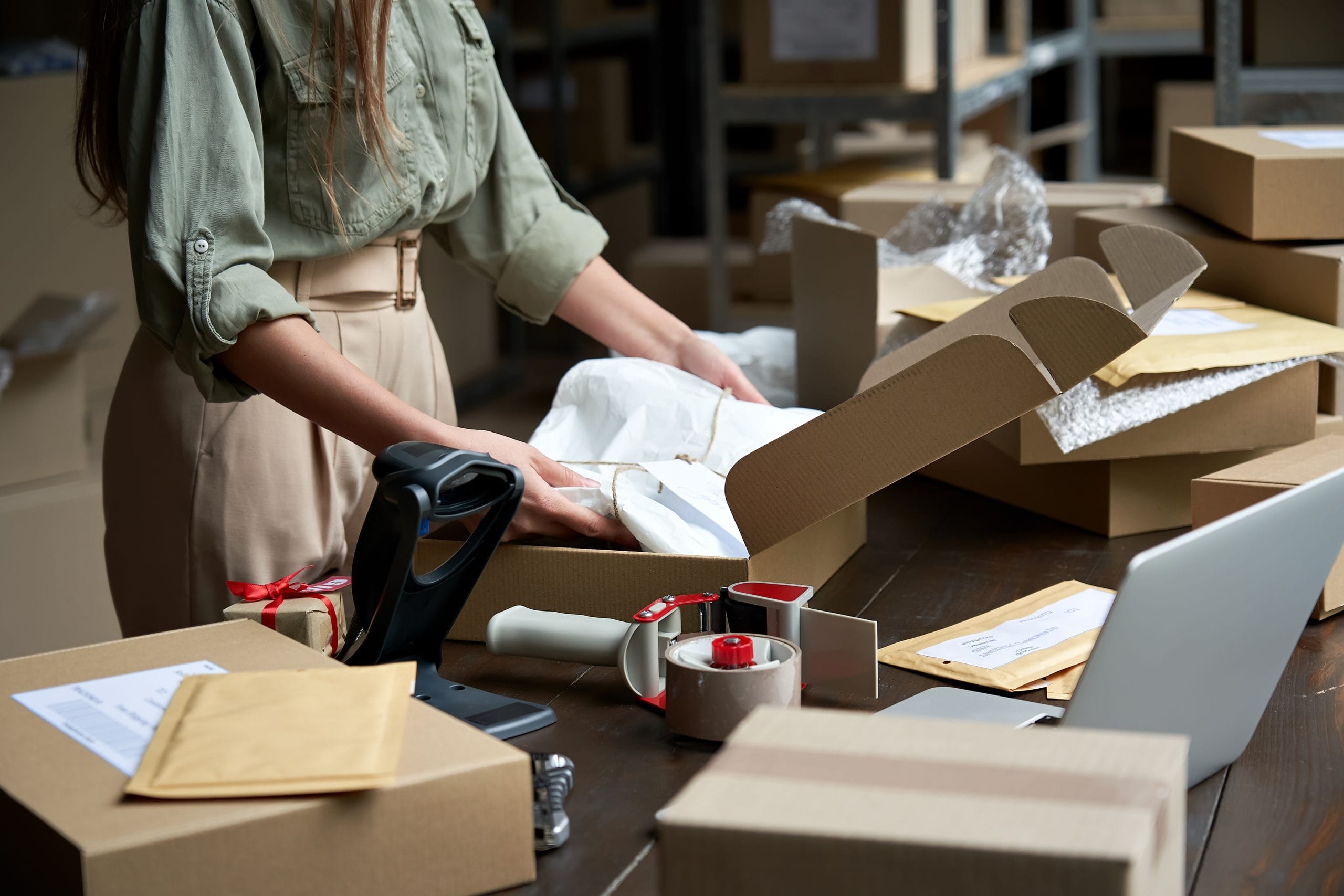
A label printer is a good example. Putting it on the table makes labels easy to reach, but it also uses surface space. Try its position with a large carton open, then check whether the packer can collect the label and reload the printer easily. Look at tape dispensers, scanners, and other tools your team uses in the same way.
There isn’t one bench height or shelf arrangement that works for everyone. Have the people using the station try it. Watch for repeated stretching, bending, or moving a carton just to reach something. When comparing adjustable tables or other ergonomic products, consider the task, the people doing it, and the products they handle. A label on a catalog page can’t tell you how the whole setup will fit your team.
Give Problem Orders Somewhere to Wait
Leave room to check the contents and packaging before closing the carton. Then decide what happens when something doesn’t match, an item is damaged, or the packer needs an answer before continuing.
Set aside a place for those orders, keeping each order’s items and details together. Make it clear who should look into the problem. Otherwise, a half-packed box can sit in the middle of the table while the packer tries to work around it.
Include this in your quality control routine. The aim is to make the check easy to do and give the packer a useful next step when they find a problem.
Try the Arrangement Before You Buy
Sketch the proposed warehouse packing station layout, then mark out the space with the tables, carts, or other suitable equipment you have available. Use actual carton sizes and the supplies your packers need. Include the people who pack orders, restock materials, and collect finished work.
Run through the same mix of orders you observed earlier. Give the trial enough work to show what happens when the station is busy. An empty area and one easy order won’t tell you much about where boxes will pile up.
During the trial, look for:
- Materials or tools that have to be moved to make room for packing.
- Trips away from the station to fetch frequently used supplies.
- Restocking that interrupts the person packing.
- Finished cartons or problem orders left on the work surface.
Change the arrangement and try the same work again. Moving a supply rack might give the packer the space they needed. A different collection routine might keep completed boxes from building up. If the actual order still won’t fit comfortably, you have a clearer reason to consider a different work surface.
Choose Equipment Around the Problem You Found
Use what you learned to compare equipment. If the table itself is too small, check candidates against your products, open cartons, tools, and available floor space. If a repeated packing task is slowing the work, consider whether equipment for that task belongs in the setup and where it would go.
Take a look at our packaging and shipping equipment. Confirm the specific equipment and its suitability for your work before making any purchases.
We can also help you look at the packing work through our warehouse consulting services, or consider how the area fits your facility through layout design.
Tell us what kinds of orders you pack, how much space you have, and what’s getting in the way. Photos, common carton sizes, or a simple sketch are useful starting points. You don’t need to have the solution worked out before you talk with us. Give us a call at (770) 638-4887 today and get a free quote.