
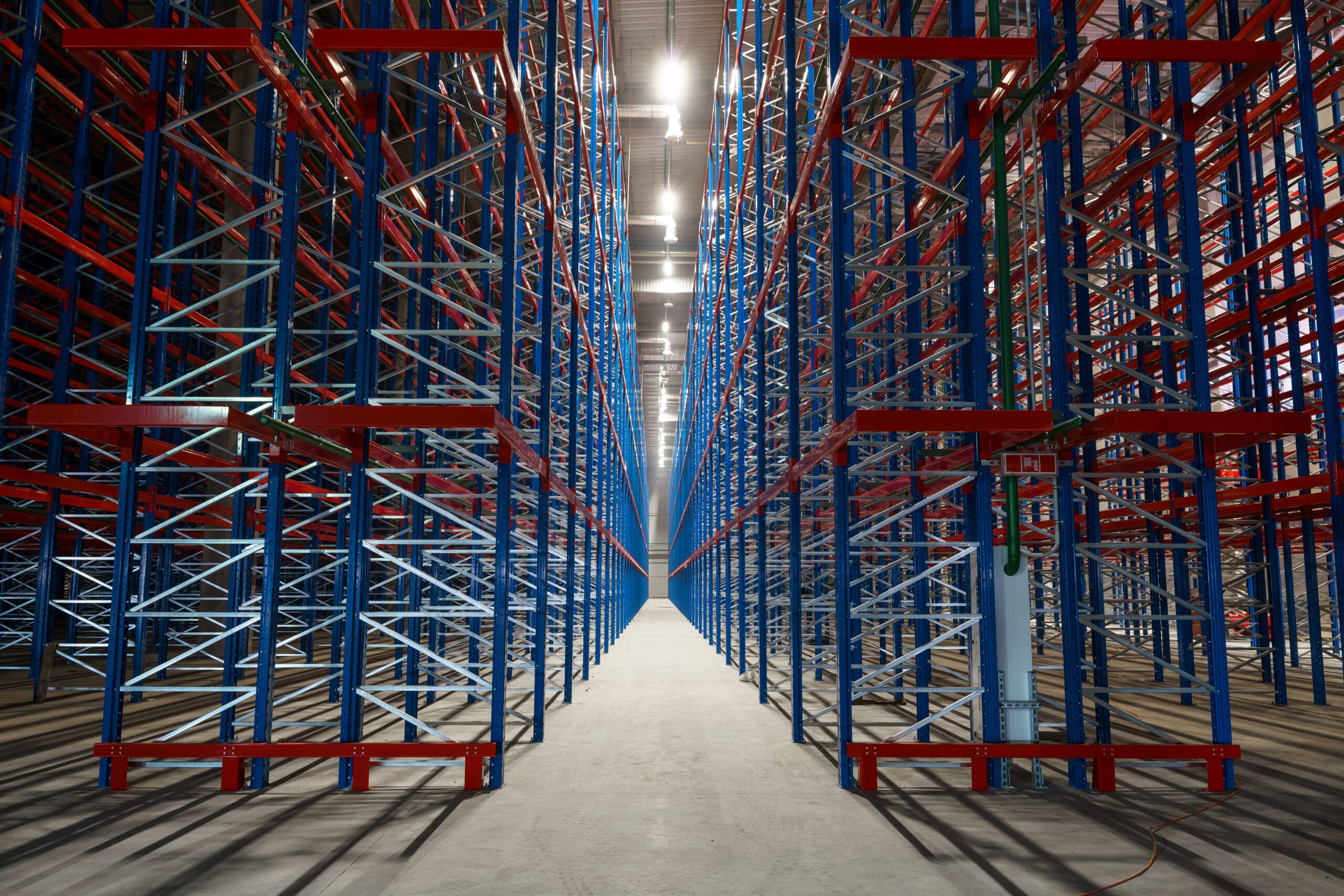
How Much Does Pallet Racking Cost?
It is the first question every facility manager asks, and for good reason. Whether you are fitting out a brand-new distribution center or just expanding a few aisles in a backroom, storage infrastructure is a major capital expense. You need a number for your budget request, but pinning down an exact price without a quote can feel like throwing darts.
The reality is that pallet racking prices vary wildly based on the steel market, your geographic location, and your specific load requirements. A system designed for light loads in Ohio will cost significantly less than a heavy-duty seismic system in California. However, you can estimate your budget accurately if you understand the components that drive the final number. This guide breaks down commercial racking costs so you can estimate your ROI and avoid hidden surprises.
The Baseline: Pallet Rack Cost Per Bay
To simplify budgeting, most warehouse managers initially look at the “cost per bay.” A standard starter bay typically consists of two upright frames, four to six beams (depending on beam levels), and wire decking.
While prices fluctuate daily based on steel commodities, here are general ballpark ranges for a standard selective rack bay (e.g., 42” deep x 96” wide x 12’ high with two beam levels):
- Used Racking Cost: $225 – $425 per bay.
- New Racking Cost: $450 – $675+ per bay.
For a deeper dive specifically into pre-owned pricing dynamics, check our guide on used pallet racking costs.
5 Primary Factors Driving Material Costs
Why does one quote come in at $20,000 and another at $35,000 for the exact same number of pallet positions? It usually comes down to engineering specs and steel volume.
1. Steel Market Volatility
Racking is, at its core, a commodity product. The price of raw steel dictates the base cost of every upright and beam. Tariffs, global supply chain shifts, and domestic production rates all cause monthly fluctuations in new rack pricing. When steel prices spike, used inventory becomes more valuable, though it typically trails new pricing trends.
2. Weight Capacity and Gauge
“Standard” isn’t always standard. A beam rated for 5,000 lbs requires significantly more steel and engineering than one rated for 1,500 lbs. Similarly, upright columns come in different gauges (thicknesses) and sizes (e.g., 3×3 vs. 4×3 columns). Over-engineering your system wastes money, but under-engineering it creates a massive safety liability and potential for collapse.
3. Seismic Zones
This is the biggest “invisible” cost driver. If your facility is located in a high-seismic zone, local building codes may require you to use larger footplates (e.g., 5×7 or 8×8 instead of standard 3×3) and heavier-gauge steel to withstand ground motion. A rack system designed for a non-seismic zone might not pass inspection in a seismic area, requiring costly retrofits or total replacement.
4. Rack System Complexity
Standard Selective rack is the most affordable and versatile option. High-density systems maximize your storage footprint but cost more per pallet position due to the specialized engineering and rails involved.
- Drive-In / Drive-Thru: Uses heavy-duty rails and requires more steel per pallet position.
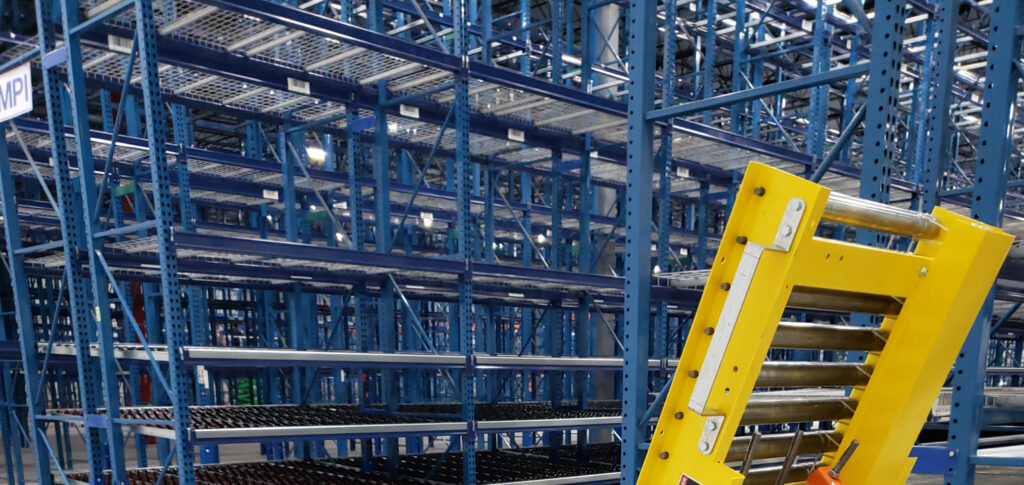
- Push-Back / Pallet Flow: Requires inclined rails, nested carts, and gravity rollers, significantly increasing the cost per bay.
- Cantilever: Uses heavy structural I-beams for long, awkward loads like lumber or pipe.
5. Freight and Shipping
Steel is heavy and takes up significant trailer space. Shipping costs can add 10% to 20% to your total project cost. Because upright frames are long and awkward, they do not pack as densely as boxed goods. Sourcing from a local manufacturer or finding a used dealer with stock near your facility can save thousands in freight charges.
The “Hidden” Costs: Installation and Permitting
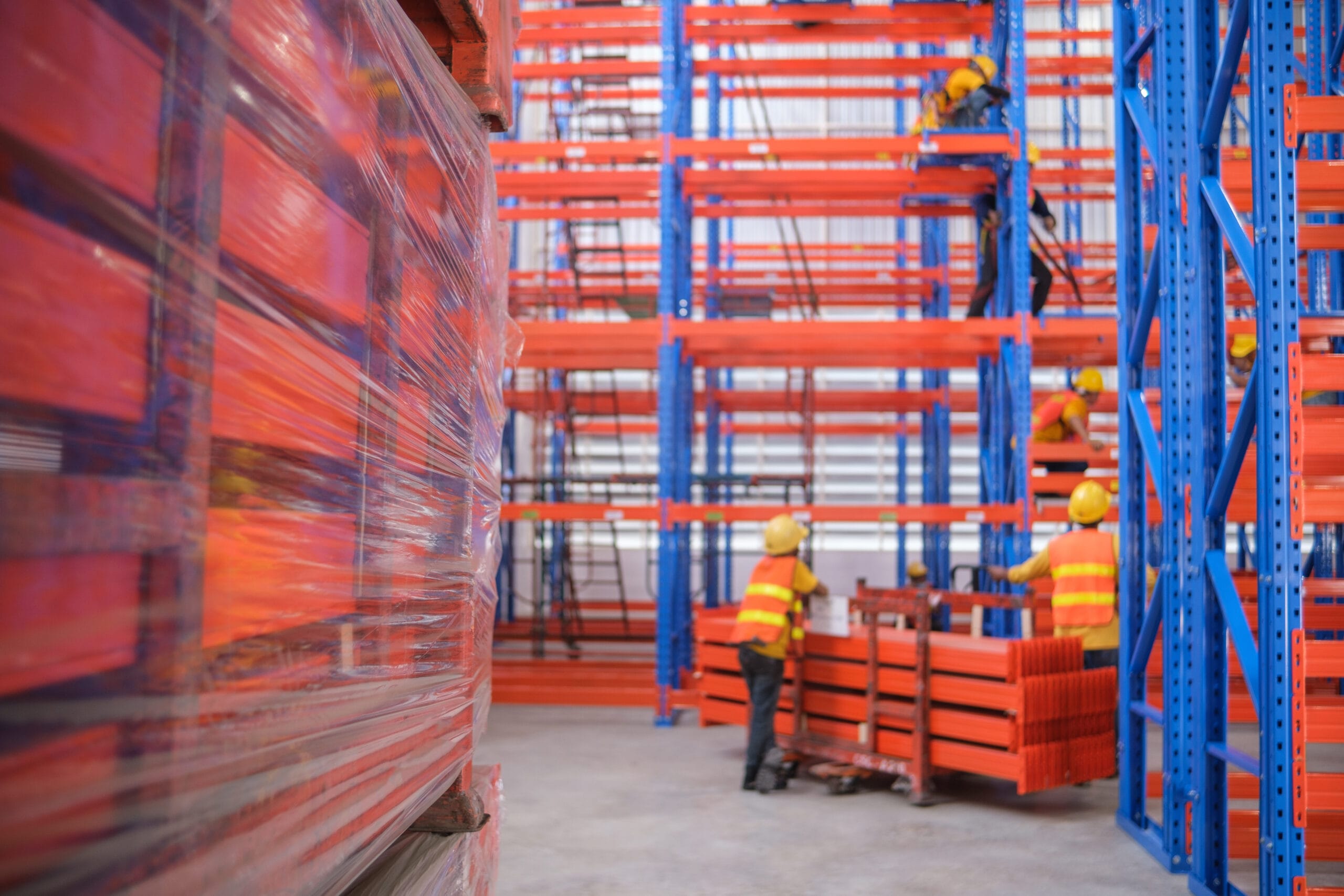
Many buyers make the critical mistake of budgeting only for the metal. However, a pile of steel sitting in your parking lot isn’t a storage solution. You must account for the “turnkey” costs to get the system operational and compliant.
Installation Labor
Pallet rack installation is a skilled trade. It involves precise leveling, concrete anchoring, and adherence to strict safety protocols. Labor rates depend on the project size, union requirements, and complexity.
Rule of Thumb: Expect installation to run roughly 20% to 35% of the material cost, though small jobs often have higher minimum daily rates.
Permitting and Engineering
Almost every municipality requires a building permit for high-piled storage (usually defined as storage over 8 feet or 12 feet high). To get a permit, you will likely need:
- Seismic calculations stamped by a professional engineer.
- Sprinkler/fire suppression analysis to ensure your water supply matches the fuel load.
- CAD layouts showing egress paths and aisle widths.
These “soft costs” are mandatory. Ignoring them can lead to the Fire Marshal red-tagging your building and forcing you to tear the rack down.
Your Budgeting Checklist
Before you request a quote, gather these six data points to ensure you get an accurate number the first time:
- Pallet Dimensions: Measure the width, depth, and height (including the load itself), plus the max weight per pallet.
- Room Dimensions: Determine clear height (floor to lowest obstruction like lights or sprinklers) and column spacing.
- Beam Length: Do you want standard 96” beams (2 pallets) or 144” (3 pallets)?
- Wire Decking: Is it required?
- Accessories: Do you need row spacers, column protectors, or end-of-aisle guards?
- Site Constraints: Are there dock restrictions, limited installation hours, or security clearance requirements?
Get a Hard Number for Your Project
Estimates and “cost per bay” guides are helpful for rough math, but they aren’t a plan. To truly optimize your budget, you need a partner who looks at your flow, your floor, and your future growth.
At Warehouse Cubed, we don’t just sell steel; we design solutions. Whether you need cost-effective used racking or a custom-engineered new system, we handle the layout, permitting, and installation so you don’t have to.
Stop guessing at the cost. Let us build a quote that matches your exact needs.