

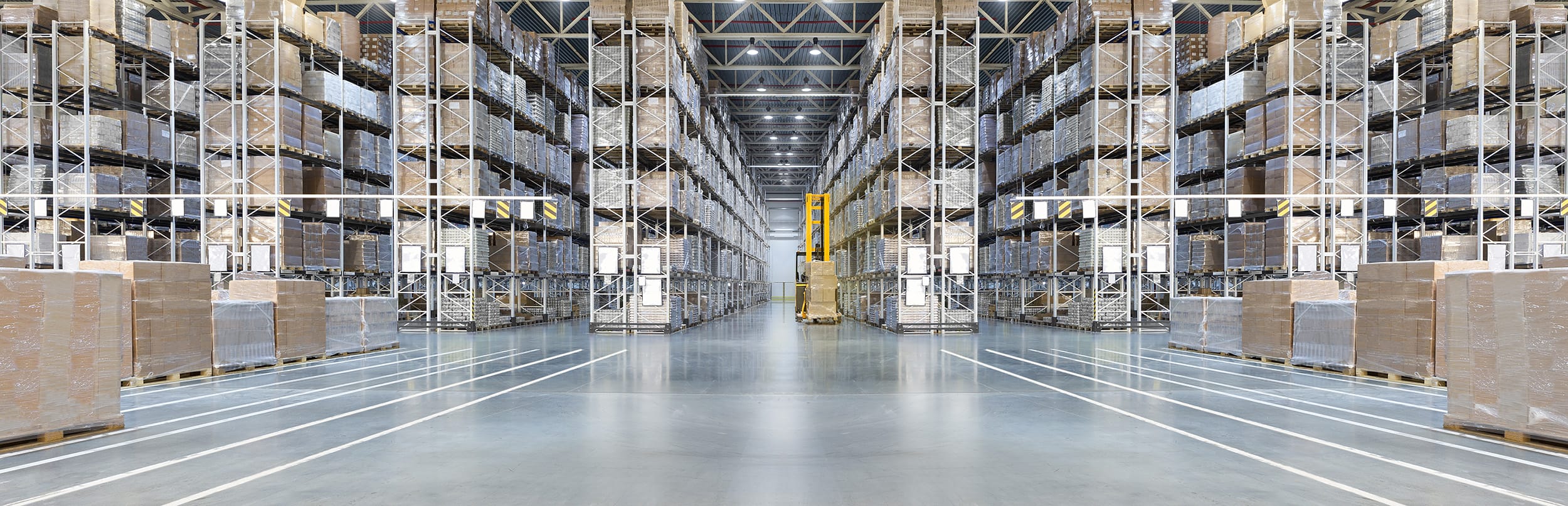
Drive-In and Drive-Through Pallet Racking
Store more pallets in less space with fewer aisles.
Maximize Storage Density with Drive-In Pallet Racking
When floor space is limited and you’re storing large quantities of the same SKU, drive-in pallet racking is one of the most efficient systems available. By eliminating aisles between every row, this high-density pallet racking configuration can increase storage capacity by 75% or more compared to conventional selective rack.
Drive-through pallet racking uses the same structural design but allows forklift entry from both ends of the lane, supporting first-in, first-out (FIFO) product flow. Both configurations are ideal for operations that need to store deep lanes of uniform product and want to get the most out of every square foot. Warehouse Cubed designs, supplies, and installs both systems in new and used configurations nationwide.
AWARD WINNING
SERVICE PROVIDER
How Drive-In and Drive-Through Systems Work
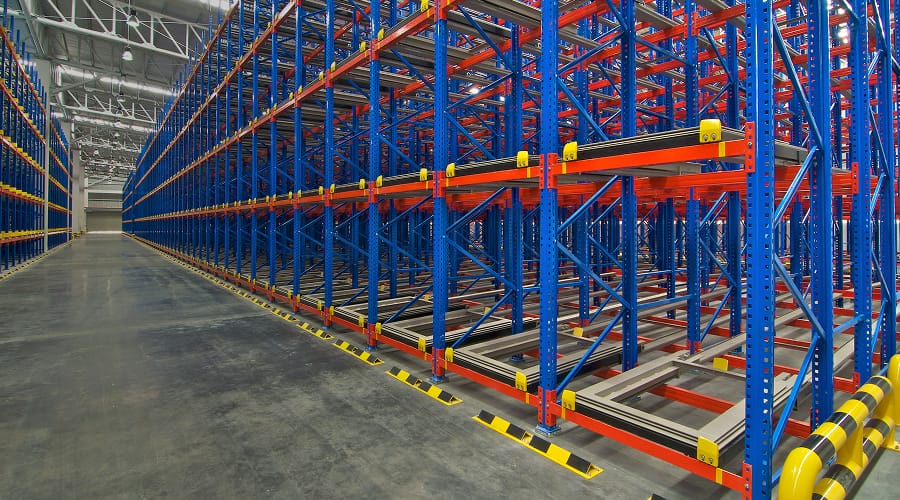
Both systems use a common structural concept. Forklifts drive directly into the rack structure and place pallets on continuous rails rather than on beams spanning between uprights.
Drive-in racking (LIFO)
Forklifts enter and exit from the same end of the lane. The last pallet loaded is the first pallet retrieved. This makes drive-in racking the better choice when product rotation is less critical, such as with non-perishable goods, seasonal inventory, or bulk raw materials.
Drive-through racking (FIFO)
Forklifts load from one end and retrieve from the opposite end. This supports first-in, first-out flow and is the preferred configuration for perishable goods, date-sensitive inventory, and any operation where product rotation matters.
In both cases, pallets are stored multiple positions deep within each lane. Lane depth typically ranges from 5 to 10 pallets, though deeper configurations are possible depending on load weight and forklift reach.
Advantages and Trade-Offs
High-density pallet racking delivers significant benefits, but it also comes with operational considerations that should factor into your decision. Here’s a straightforward look at both sides.
Advantages
- Dramatic space savings. Eliminating individual aisles between rows means you can store significantly more pallets in the same footprint, or achieve the same capacity in a smaller building.
- Lower cost per pallet position. Fewer structural components per position compared to selective rack translates to material cost savings on large-scale installations.
- Cold storage efficiency. Drive-in racking is especially popular in refrigerated and freezer environments where every cubic foot of conditioned space carries a premium operating cost.
- Drive-Through Pallet RackingWorks well when you store a small number of SKUs in high volume and can dedicate entire lanes to a single product.
Trade-offs to consider
- Reduced selectivity. You cannot access a pallet in the middle of a lane without first removing the pallets in front of it. Operations with high SKU counts and frequent mixed picks are generally better served by selective rack or push-back systems.
- Slower load and retrieval times. Forklifts must travel into and back out of each lane, which increases cycle time per pallet compared to a face-pick from selective racking.
- Higher risk of structural contact. Forklifts operating inside the rack structure are more likely to contact uprights and rails. Proper training, guide rails, and protective accessories are essential.
- Lane discipline required. Partially filled lanes reduce effective density. Operations need to manage lane assignments carefully to keep utilization high.
Not sure whether drive-in racking or another system is the best fit? Our warehouse consulting team can evaluate your SKU profile, throughput requirements, and facility constraints to recommend the right approach.
Forklift Requirements
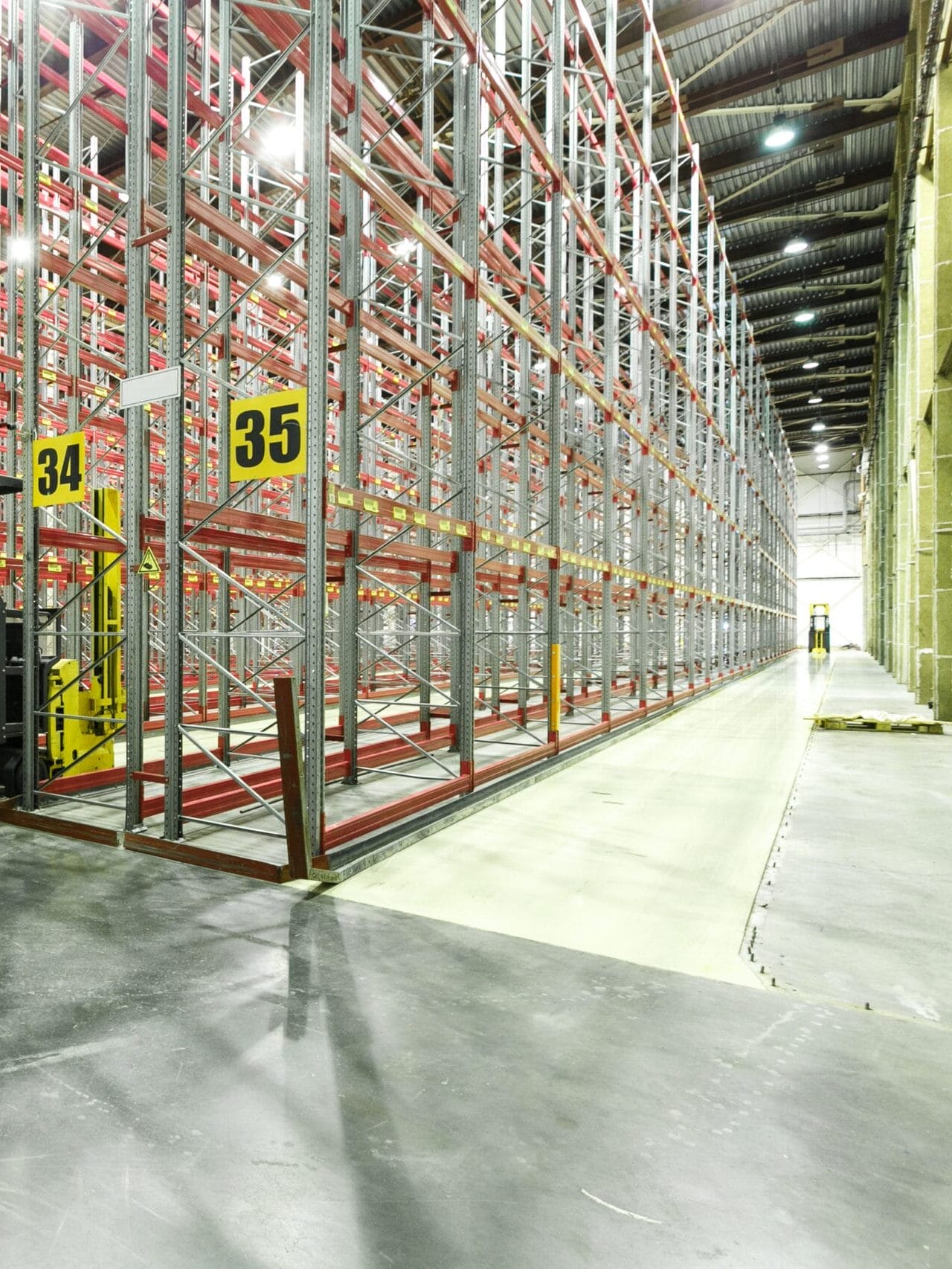
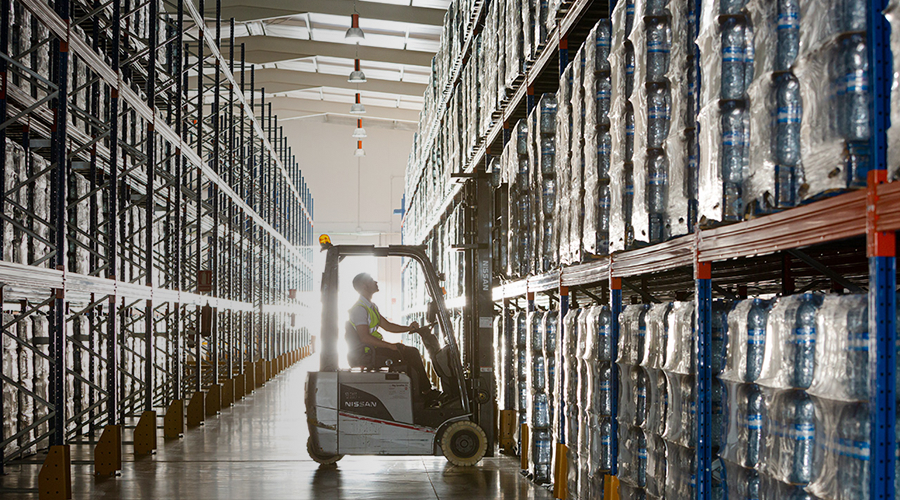
Drive-in and drive-through racking places specific demands on forklift equipment and operator skill. The forklift must enter a narrow lane, lift to rail height, and place or retrieve pallets without contacting the surrounding structure.
Key considerations
- Forklift type. Counterbalance forklifts are most commonly used. Reach trucks can work in some configurations but may be limited by lane depth.
- Mast height and free lift. The mast must reach the highest rail level with enough free lift to clear pallet placement without raising the entire mast assembly into overhead obstructions.
- Load center and capacity. Capacity ratings should account for the actual pallet weight at the farthest reach point inside the lane.
- Operator training. Working inside the rack structure requires precision. Investing in operator training and clear lane markings significantly reduces the risk of forklift-to-rack contact.
Safety and Structural Protection
Because forklifts operate inside the rack, drive-in and drive-through systems experience more structural contact than open-aisle racking. Proactive safety measures are necessary for safe, long-term operation.
Recommended safety accessories
- Guide rails (floor-mounted) along each lane entry to steer forklifts into the correct path
- Column protectors at every lane entry point and at building columns adjacent to the system
- End-of-aisle guards to protect the face of each row from impact
- Load capacity and lane assignment signage posted at every entry point
- Routine rack inspections to catch damage from forklift impacts before it compounds into a structural failure
Warehouse Cubed offers safety accessories for every drive-in and drive-through installation quote.

Get a Quote for Your High-Density Racking Project
Whether you’re planning a new cold storage build or converting existing floor space to higher-density storage, we can help you determine the right system and get it installed on schedule.
Have these ready for the quickest quote
- Facility address and delivery zip code
- Available clear height and floor slab thickness
- Pallet dimensions, weight, and number of SKUs
- Desired lane depth and LIFO or FIFO preference
- Forklift type currently in use
- Timeline and installation requirements