

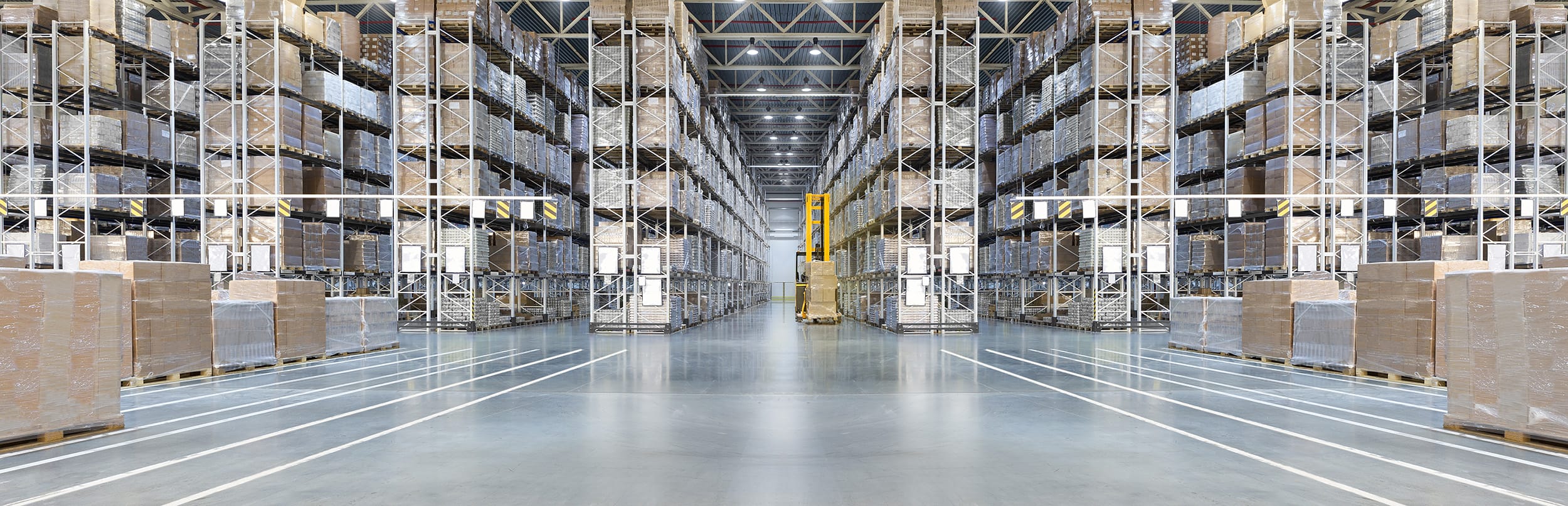
Selective Pallet Racking Systems
The most versatile storage solution for warehouse operations of every size.
The Industry’s Most Widely Used Rack System
Selective pallet racking is the backbone of modern warehouse storage. It gives you direct access to every pallet position without moving other loads, making it the go-to choice for facilities that handle a wide range of SKUs and need fast, flexible picking.
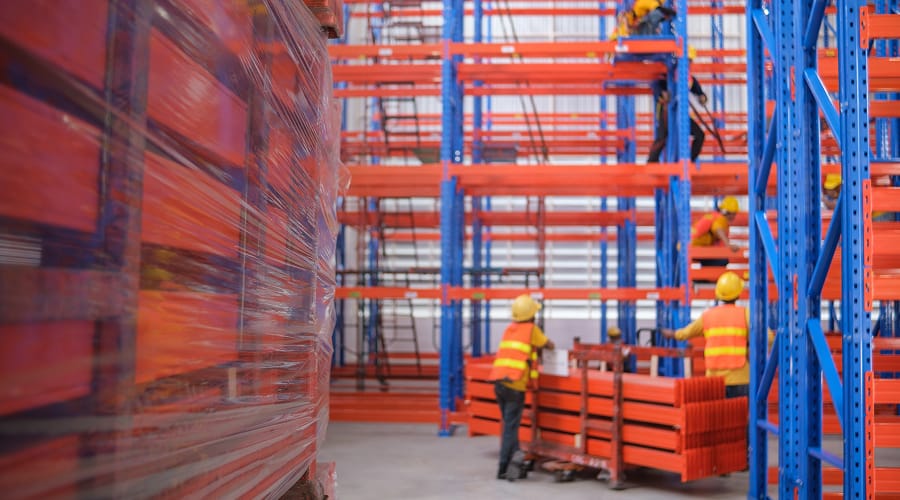
Whether you’re outfitting a new distribution center or upgrading an existing facility, a well-designed selective racking system improves storage density, speeds up throughput, and keeps your operation running safely. Warehouse Cubed supplies both new and used selective pallet rack and handles everything from layout and design through professional installation.
AWARD WINNING
SERVICE PROVIDER
Is Selective Pallet Racking Right for Your Operation?
Selective rack works across nearly every industry and application, but it’s especially effective when your operation requires immediate access to a large number of individual SKUs.
Best-fit scenarios
- Distribution and 3PL warehouses handling high SKU counts with varied pallet sizes
- E-commerce fulfillment centers that need rapid pick-and-ship cycles
- Food and beverage facilities that follow FIFO rotation and need clear sightlines for inspection
- Manufacturing plants storing raw materials, components, and finished goods side by side
- Pharmaceutical and healthcare warehouses where lot tracking and accessibility are critical
If your operation stores fewer SKU types in very high volume, denser systems like drive-in or push-back racking may be a better fit. Not sure which system you need? Our Warehouse Optimization team can assess your facility and recommend the right approach.
Key Design Variables
No two warehouses are identical, and a selective pallet rack that performs well in one facility can underperform in another if the design variables aren’t addressed upfront. Here’s what we evaluate before specifying your system.
Upright frame height and depth
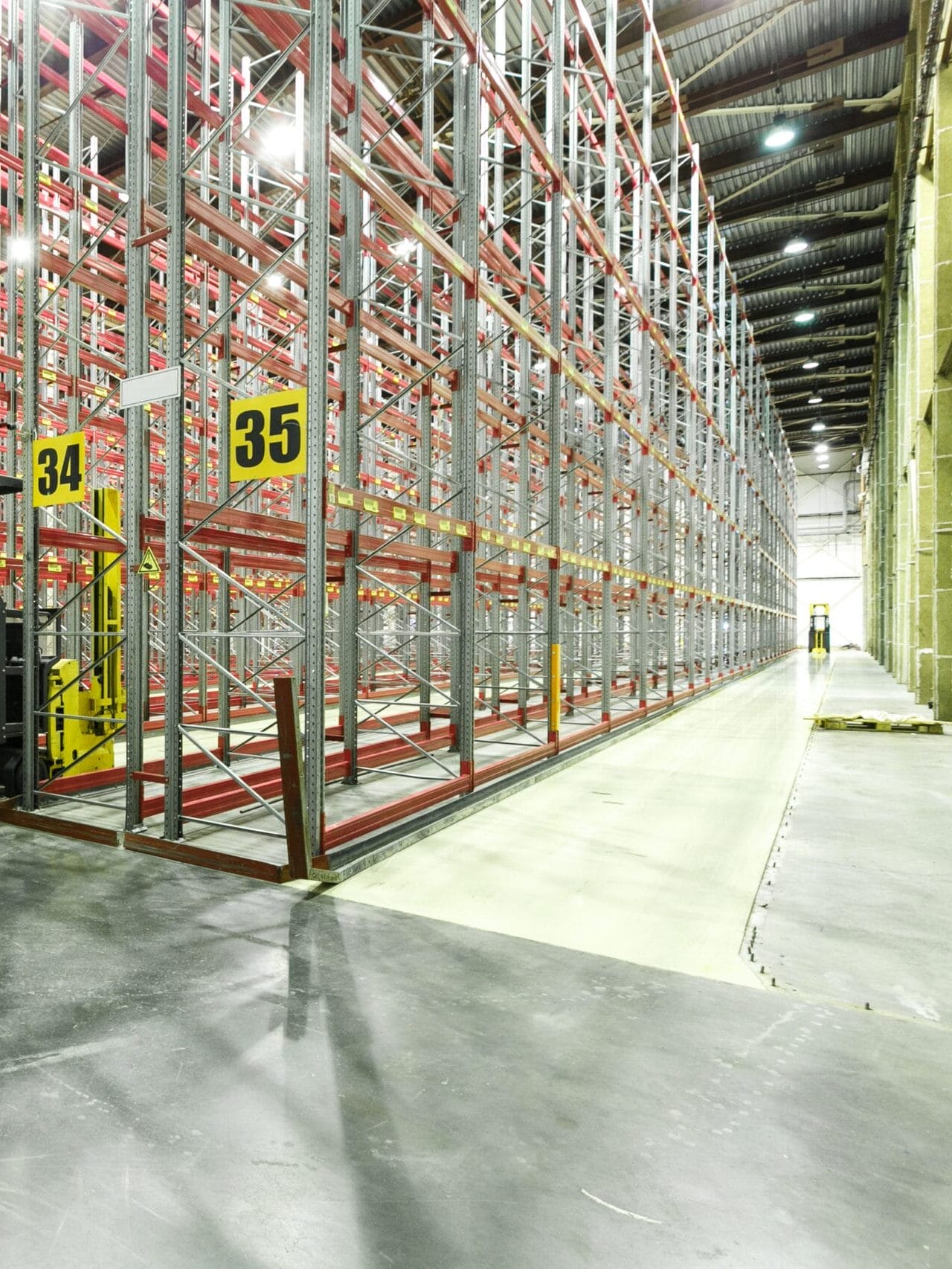
Frame height is driven by your clear ceiling height and forklift reach. Frame depth must match your deepest pallet so loads sit securely without overhanging into the aisle.
Beam length and capacity
Beam length determines your bay opening, typically sized to hold two or three pallets per level. Beam capacity must account for the heaviest load you’ll place at that level, including the pallet weight itself.
Aisle width
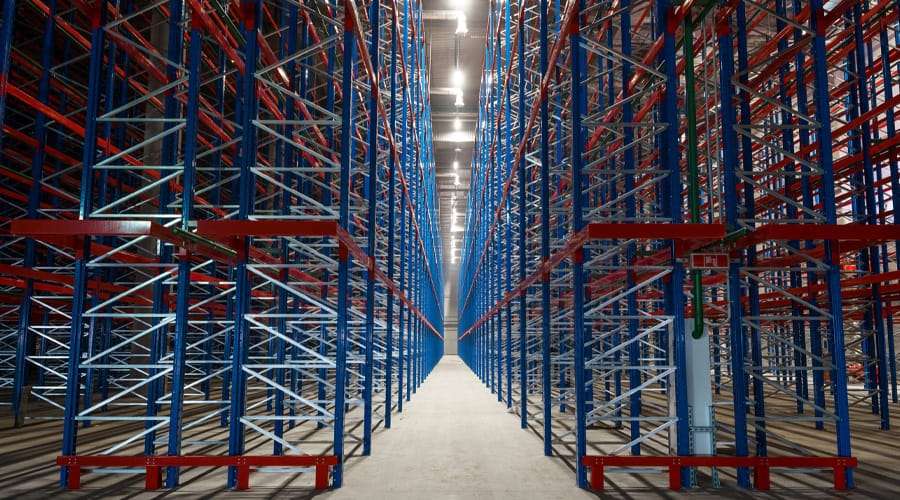
Standard aisles typically range from 10 to 12 feet for sit-down counterbalance forklifts. Narrow-aisle and very-narrow-aisle configurations can reclaim significant floor space when paired with reach trucks or order pickers.
Floor slab condition and seismic requirements
Anchor strength depends on your slab thickness and condition. In seismic zones, additional bracing and engineering calculations are required to meet local building codes.
Number of levels and beam spacing
Level spacing should accommodate your tallest load plus a minimum clearance to the beam above. Getting this right from the start prevents wasted vertical space and avoids costly reconfiguration later.
Safety Accessories and Compliance
A selective racking system is only as safe as the accessories and practices that support it. We recommend and supply the following protective components as part of every installation.
Standard safety components
- Column protectors to absorb forklift impacts at floor level
- End-of-aisle guards to shield rack rows facing high-traffic lanes
- Wire decking to support cartons, provide sprinkler water flow, and allow visual inspection from below
- Row spacers and wall ties to maintain proper alignment between back-to-back rows
- Load capacity labels posted at every bay per ANSI/RMI guidelines
- Safety clips or beam locks to prevent accidental beam dislodgement
Routine inspection is just as important as the initial install. Our safety audit services identify damage, overloading, and compliance gaps before they become costly problems.
New and Used Selective Pallet Rack
Budget flexibility matters. That’s why Warehouse Cubed carries both new and used selective pallet racking to match your project scope and investment level.
New systems
New selective rack is built to your exact specifications: height, depth, capacity, and finish. It’s the right choice for new construction, engineered installations, or environments with specialized coatings such as galvanized or powder-coat finishes.
Used systems
Quality used selective pallet rack offers significant cost savings without sacrificing performance. Every used component we sell is inspected for structural integrity, connector condition, and overall fit before shipping. Used inventory is availability-based and moves quickly, so early inquiry is recommended.
Whether new or used, we can bundle material, design, and installation labor into a single quote, giving you one point of contact from start to finish.


Get a Quote for Your Selective Racking System
The fastest way to get accurate pricing is to speak with us. Share your facility details and we’ll recommend the right configuration for your operation.
Have this ready for the fastest quote
- Facility address and delivery zip code
- Available clear height and floor slab thickness
- Pallet dimensions and maximum load weight per position
- Number of SKUs and approximate pallet count
- Forklift type (sit-down, reach truck, or order picker)
- Timeline and installation requirements